


Termite baiting systems are a smart, effective way to protect Brisbane homes from destructive termites. These systems work by strategically placing bait stations in the ground or above ground to lure termites, monitor their activity, and deliver active ingredients that eliminate colonies over time. But how exactly do these systems operate, where and when should they be applied, and what factors could impact their success? This article unpacks the essentials to help Brisbane homeowners understand termite baiting systems’ role in a robust termite management plan.
For Brisbane’s humid, termite-prone environment, baiting systems offer a less intrusive and environmentally conscious alternative to traditional chemical treatments. They allow ongoing monitoring and targeted treatment, reducing chemical use while maximizing protection. Understanding the application, maintenance, and limitations of baiting systems ensures homeowners make informed choices for long-term termite control.
What Are the Different Types of Termite Baiting Systems and How Do They Work?
Termite baiting systems typically come in two types: inground and above ground bait stations. Both serve the purpose of luring termites with a palatable bait containing active ingredients that disrupt termite colonies.
Inground bait stations are buried around the home’s perimeter at strategic points. They appeal to foraging termites moving through the soil, allowing early detection and colony elimination. Above ground stations are placed in accessible locations inside or near structures where termite activity might bypass inground systems, such as in roof voids or subfloors.
Inground stations create a protective ring around the home, intercepting termites before entry.
Above ground stations target termites inside infested structures or where soil access is limited.
Bait stations contain cellulose-based food sources treated with slow-acting active ingredients.
Termites feed on bait, return to their colony, and spread the active ingredient, leading to colony collapse.
Bait stations need regular monitoring to assess termite feeding activity and bait consumption.
Both types are an integral part of integrated termite management plans emphasizing detection and control.
Termite Baiting Types Explained
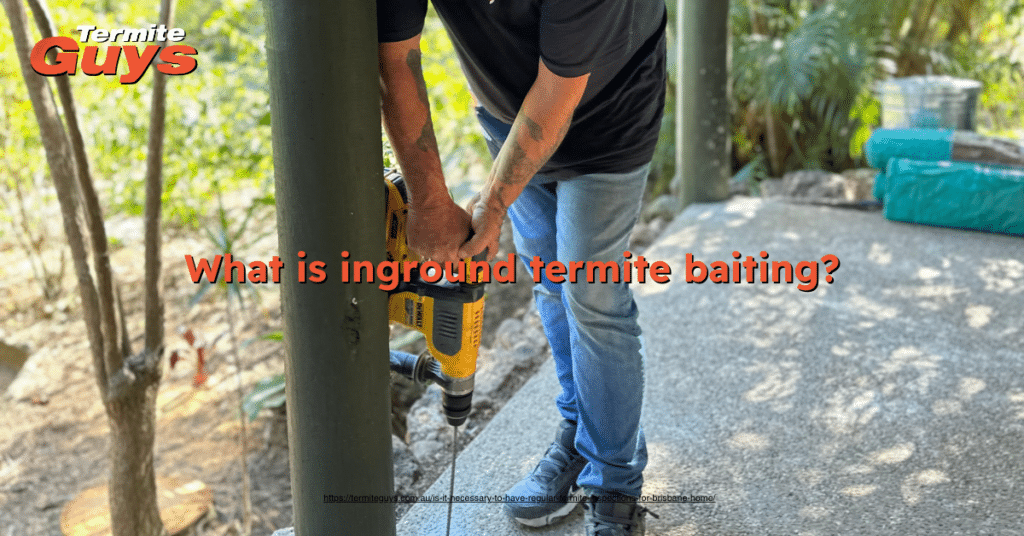
What is inground termite baiting?
Inground baiting involves burying bait stations around the home’s foundation to attract subterranean termites that travel through the soil.
How do above ground termite bait stations work?
Above ground bait stations are placed inside structures like subfloors or roof spaces to capture termites that have already gained access or bypassed soil stations.
What Active Ingredients Are Used in Termite Baiting Systems and Why?
Active ingredients in termite baiting systems are carefully chosen to disrupt termite biology and colony function without causing immediate termite death. The delayed toxic effect allows termites to share bait within the colony, maximizing impact and leading to eventual colony elimination.
Commonly used active ingredients include chitin synthesis inhibitors like novaluron or insect growth regulators. These chemicals prevent termites from molting and developing normally, leading to population decline over weeks or months. The slow action is crucial, as immediate death reduces bait sharing and colony exposure.
Active ingredients are registered and approved for termite control by authorities like APVMA.
They target essential termite biological processes, particularly molting and development.
Slow-acting baits promote colony-wide distribution through termite social behavior.
Use of baiting reduces widespread chemical use in soil, supporting environmental safety.
Bait formulations may differ slightly but focus on longevity and palatability.
Regular replenishment and monitoring are needed to keep bait effective.
Understanding Active Ingredients
Why are delayed action toxins preferred in termite baits?
Delayed action toxins enable termites to carry bait back to the colony and distribute it effectively, maximizing colony elimination chances.
Are active ingredients in baits safe for the environment?
Yes, they are targeted specifically at termites and are used in controlled amounts, minimizing environmental impact compared to broad chemical soil treatments.
How Should Termite Baiting Systems Be Applied and Maintained in Brisbane Homes?
Correct application and maintenance are vital for baiting systems to function effectively in Brisbane homes. Initial installation involves placing stations at regular intervals around the property perimeter, in line with termite risk and soil conditions. Above ground stations supplement where termite activity is detected or suspected inside the property.
Once installed, stations require ongoing monitoring every 3 months or more frequently during initial colony activity. This inspection involves bait consumption checks, replenishment of bait, and assessing termite presence. Maintaining this schedule helps detect new termite activity promptly and ensures bait remains palatable and effective.
Stations should be located close to the soil or timber accessible by termites.
Avoid disturbing soil or landscaping that could hinder termite foraging pathways.
Monitoring includes visual checks and bait replacement based on termite feeding.
Stations are replaced or repaired if damaged by environmental factors or human activity.
Baiting systems usually come with a warranty covering inspections and maintenance schedules.
A professional termite management company should handle installation and monitoring for consistent results.
Tips for Application and Maintenance
How often should termite baiting stations be monitored?
Monitoring is generally recommended every 3 months for the first year and then every 6 months once the colony is eliminated.
Can bait stations be damaged or sabotaged?
Yes, bait stations can be affected by weather, soil movement, pets, or children, so protection and regular checks are essential to maintain effectiveness.
What Factors Can Cause Termite Baiting Systems to Fail?
While efficient, termite baiting systems can fail if certain conditions are compromised. Improper installation, infrequent monitoring, or environmental disturbance may prevent termites from finding or feeding on the bait. Additionally, alternative food sources around the home can reduce bait attractiveness.
Rapid termite colony expansion or multiple colonies nearby can also challenge bait effectiveness if not all colonies are intercepted. Weather extremes like heavy rain can impact bait palatability or structural integrity of stations. Furthermore, some termite species may show resistance or reduced bait acceptance, requiring alternative strategies.
Infrequent or absent monitoring delays bait replenishment and detection.
Incorrect station placement reduces termite encounters with bait.
Excessive moisture or flooding can wash away bait active ingredients.
Presence of alternate cellulose sources like timber debris reduces bait interest.
Failure to coordinate baiting with other termite controls weakens results.
Certain termite species may be less susceptible or slower to respond to baiting.
What Most People Ask About Baiting Failures
Why might termites avoid bait stations?
Termites might avoid stations if they have access to more attractive or abundant food sources nearby, or if stations are placed incorrectly.
How can weather affect baiting systems?
Heavy rain or flooding can degrade bait material and active ingredients, reducing their attractiveness and effectiveness.
How Often Should Termite Baiting Systems Be Replaced or Serviced?
Termite baiting systems are not a one-time solution; they require regular servicing and replenishment to sustain termite control. Typically, bait stations are inspected and bait replaced every 3 months initially, as persistent termite activity is established and colonies are controlled.
Once termite activity ceases, monitoring intervals may be extended to 6 months or annually depending on risk. Stations and devices themselves generally have a lifespan of several years but need physical inspections to repair any damage and replace worn components.

Warranty periods offered by termite management companies generally cover initial installation plus ongoing inspections and repairs for 1 to 5 years. Effective servicing ensures colonies do not re-establish and that the home remains protected long-term.
Most manufacturers recommend 3-month monitoring in the first year.
Baits should be replenished as soon as feeding declines.
Stations should be physically inspected for damage each visit.
After colony elimination, monitoring frequency may decrease.
Warranty terms usually specify inspection and maintenance requirements.
Long-term servicing by professionals maximizes system lifespan and efficacy.
Useful Tips to Bear in Mind for Replacement and Service
Can termite bait stations last forever?
No, stations need periodic servicing and replacement of bait or damaged parts to maintain protection.
What happens if bait is not replaced on time?
Expired or depleted bait loses attractiveness, allowing termite colonies to persist or nearby colonies to invade.
Where To Find A Reliable Termite Company In Brisbane!
Frequently Asked Questions About Termite Baiting Systems
Are baiting systems a good alternative to chemical soil treatments?
Yes, baiting systems provide targeted, environmentally friendly termite control without broad chemical applications.Can termite baiting systems eliminate an entire colony?
When properly installed and monitored, baiting systems can lead to complete colony elimination over time.Is professional installation necessary for termite baiting?
Professional installation ensures optimal placement, safety, and compliance with Australian standards and warranties.Do bait stations pose risks to pets or children?
Stations are designed to be tamper-resistant and safe when installed correctly, but supervision is recommended.How soon can termite baiting systems show results?
Results may take several months as termites carry bait through the colony leading to gradual population collapse.
Summary!
Termite baiting systems are an effective, modern method for protecting Brisbane homes from destructive termites. By using strategically placed inground and above ground bait stations, monitoring termite activity closely, and applying slow-acting active ingredients, these systems enable targeted colony control that is less disruptive and environmentally sensitive. Proper application, consistent maintenance, and understanding factors that may hinder effectiveness are crucial to success.
For Brisbane homeowners seeking trusted termite management with reliable service and adherence to Australian standards, Termite Guys Brisbane stands out as the go-to specialist. Mike Brewer and his team offer expert guidance, professional installation, and ongoing baiting system monitoring to safeguard properties from termite damage long-term. With Termite Guys Brisbane, homeowners get peace of mind through proactive termite control tailored to Brisbane’s unique environment and termite pressures.