

Protecting a Leafy Brisbane Property With a Smarter Long-Term Plan
A Beautiful Home in The Gap Can Still Have a Hidden Problem
Buying or protecting a home in The Gap should feel exciting. It is one of Brisbane’s leafy, family-friendly suburbs, known for larger blocks, established gardens, mature trees, and homes close to bushland surrounds. But those same features that make the area so appealing can also increase termite pressure around a property.
That is exactly why this case study matters.
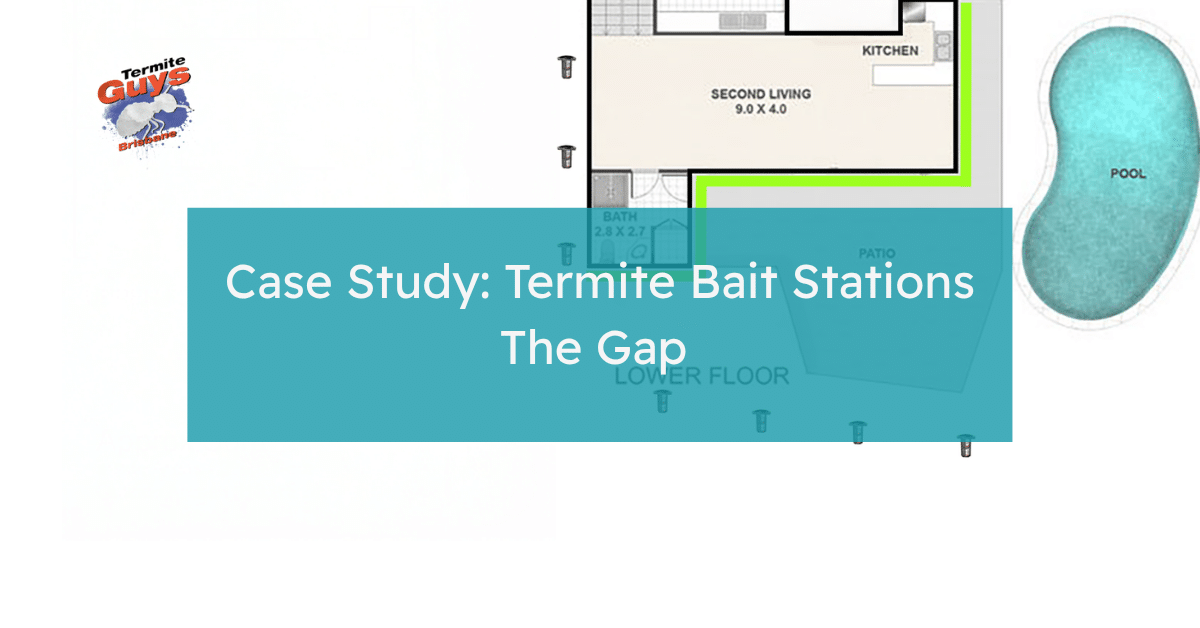
This lower-floor property in The Gap had the kind of layout that looks impressive on paper but requires careful termite planning in real life. The treatment map shows a substantial home with a large garage and workshop, laundry, second living area, bathroom, kitchen edge, patio, and pool area, with multiple bait stations positioned around the outside perimeter. It is the kind of property where termites do not need a wide-open invitation. They just need one hidden path.
For many homeowners, that is the stressful part. You can keep the house tidy, maintain the yard, and still not know whether termites are moving quietly through the soil around the structure. You may not know whether your home needs a barrier, a bait station system, or a more tailored plan. And if you choose the wrong company, you can end up with more confusion, more cost, and less confidence than when you started.
The Real Problem Was Not Just Termites. It Was Uncertainty.
For homeowners and property buyers, the termite issue is only part of the story. The bigger problem is often not knowing who to trust, what system suits the property, and whether the treatment will actually work long term.
That uncertainty creates real frustration.
- You may not know how serious the termite risk really is
A home can look perfectly fine from the outside while still having conditions that support termite activity. In leafy suburbs like The Gap, vegetation, moisture, shaded soil, and mature landscaping can all increase the need for ongoing vigilance, even when there is no obvious visible damage. - You may worry about paying for the wrong treatment
Many property owners are concerned about spending money on a system that does not truly match the site. A complex home with a pool, patio, service areas, and a large footprint often needs a more strategic approach than a simple, generic solution. - You may be afraid of hidden costs later
The cost of a termite management system is one thing. The cost of timber repairs, structural damage, and delayed detection is something else entirely. That is why a good termite plan is not just a treatment decision. It is a property protection decision.
Why This Property Needed a Smarter Solution
This was not a small or simple house. The diagram shows a large lower-floor structure with several features that can make termite management more complex.
Key site conditions visible in the treatment map
- A long external perimeter
The garage and workshop area creates an extended wall line, which means more ground-level perimeter to protect. The more building edge there is, the more potential termite approach zones there can be, especially around corners, transitions, and concealed access points. - A mix of internal service areas and living spaces
The layout includes a laundry, bathroom, kitchen-side wall, and second living area. These types of zones matter because moisture, plumbing penetrations, and slab transitions can all affect how termites approach and how a management system should be designed. - A patio and pool-side section
Outdoor entertaining areas and adjoining hard surfaces can change how termite treatment is applied around the perimeter. Where access is interrupted by paving, structures, or design features, a flexible termite strategy becomes even more important. - Nearby vegetation and a leafy setting
Even from the plan, it is clear the property sits in a landscaped environment. In suburbs like The Gap, mature trees, gardens, and organic ground cover can help create the damp, sheltered conditions termites like when foraging close to homes.
Meet Mike Brewer: The Brisbane Termite Specialist Who Helps You Get It Right
When homeowners are worried about termites, they do not need pressure. They need clarity.
Meet Mike Brewer from Termite Guys Brisbane. Mike is not there to confuse you with technical talk or push a one-size-fits-all treatment. He is there to help you understand what is happening around your property, what the real risks are, and what plan makes the most sense for your home and budget. That matches the StoryBrand direction in your writing guide, which asks for Mike to be positioned as the experienced guide who helps property owners move from uncertainty to confidence.
At Termite Guys Brisbane, the goal is simple: help homeowners protect valuable Brisbane properties with practical termite advice, honest recommendations, and long-term management that suits the actual site.
That means:
- no guesswork
- no overcomplication
- no generic treatment plan where a tailored one is needed
Why Bait Stations Were a Strong Fit for This Property
On this site, a termite bait station system made strong practical sense because the property layout called for flexibility, coverage, and long-term monitoring.
Here is why baiting suited this home
- The system could be tailored to the shape of the house
This home has a long and irregular lower-floor footprint rather than a simple square slab. The station layout shown in the map allows the termite management plan to follow the real shape of the building and cover multiple approach angles around the perimeter. - The property includes interrupted access zones
The patio and pool-side areas suggest parts of the perimeter are influenced by hard surfaces and outdoor design features. Bait stations are often valuable on these kinds of sites because they can be strategically placed around the property rather than depending on the same treatment conditions in every section. - Monitoring is part of the strength of the system
A bait station system is not only about installation. It is about what happens next. Stations can be checked over time for activity, adjusted where required, and used as part of an ongoing termite management plan rather than a once-off response. - It fits the realities of leafy Brisbane suburbs
In suburbs such as The Gap, termite pressure is not something homeowners should treat lightly. A monitored system is especially useful where the surrounding environment can remain attractive to termites all year round.
What the Treatment Map Suggests About the Strategy
The diagram shows a ring of bait stations around much of the lower-floor perimeter, with attention given to key external edges and a highlighted section along part of the patio-facing side of the home.
That suggests a strategy built around interception, monitoring, and risk reduction.
The likely thinking behind the layout
- Protect the long garage and workshop side
This is one of the most exposed stretches of the building perimeter. A long wall line increases the importance of consistent external monitoring because termites can forage along multiple paths before reaching concealed building entry points. - Give attention to wet-area and service zones
Laundry, bathroom, and kitchen-adjacent areas are always worth careful consideration in termite work. Moisture sources and service penetrations can make some parts of the structure more vulnerable than homeowners realise. - Support difficult transitions near the patio area
The highlighted section suggests focus on an important structural edge where the lower-floor living area meets the patio zone. These transitions can be overlooked in generic treatment planning, which is why a site-specific map is so valuable. - Create a wider monitored perimeter around the home
Rather than waiting for termites to appear inside the building, the bait station layout aims to detect and intercept foraging activity outside the structure. That gives the homeowner a more proactive form of protection.
Why The Gap Deserves Special Attention for Termite Management
The Gap is a suburb many Brisbane families love for its greenery, privacy, and established homes. But with that appeal comes a practical reality: termite risk can be higher where homes sit among mature vegetation, shaded ground, and garden-rich surroundings.
Common local factors that can support termite pressure
- Established trees and root zones
Mature landscaping can help retain moisture in the soil and create a more stable foraging environment around a property. This does not mean every tree is a termite problem, but it does mean the site needs to be assessed with the surrounding landscape in mind. - Leafy backyards and garden beds
Mulch, organic matter, timber edging, and dense plantings can all create conditions termites like. On larger suburban blocks, these features often sit close to the structure, which makes ongoing termite monitoring more important. - Warm Brisbane conditions
Brisbane’s climate supports termite activity for much of the year. Homeowners in The Gap should not assume that a lack of visible signs means a lack of risk. - Homes with outdoor living features
Pools, patios, retaining edges, and side access areas often create interrupted treatment conditions around the home. This is one reason bait stations can be so useful on more complex suburban properties.
What Could Have Happened Without a Proper Plan
Many homeowners delay termite protection because they are unsure what to do. Unfortunately, waiting often gives termites time.
The cost of doing nothing can be far greater
- Hidden entry points can remain unnoticed
On a property with this many perimeter sections and transitions, it is easy for one weak area to go undetected. Termites do not need wide exposure. They only need one concealed access route. - Homeowners can assume they are protected when they are not
One of the biggest risks is false confidence. A property can feel secure simply because there are no obvious signs, yet active termite pressure may still be building outside the structure. - Repair costs can quickly exceed prevention costs
Once termites reach structural timber, the damage can become expensive and disruptive. The right management plan at the right time is almost always the better financial decision. - Stress keeps building in the background
Even when damage is not visible, uncertainty affects how homeowners feel about their property. It is hard to fully relax in your own home if you suspect there may be a hidden termite issue.
The Plan: How Termite Guys Brisbane Helps Homeowners Move Forward
A good termite system should feel understandable. People do not want more confusion. They want a clear next step.
Here is the simple 3-step plan
- 1. Book a discovery call
The first step is to speak with Mike Brewer and explain what is happening with the property. Whether you are worried about termite risk, buying a home, or comparing treatment options, this call helps bring clarity to the situation. - 2. Get a site assessment and tailored recommendation
Every property is different. Mike assesses the layout, risk factors, access conditions, and termite pressures around the home so the recommendation matches the site instead of relying on guesswork. - 3. Put the right long-term system in place
Once the property has been assessed, the right termite management plan can be installed and monitored. For homes like this one in The Gap, that can mean a strategic bait station system designed to reduce risk and provide ongoing peace of mind.
What Success Looks Like for the Homeowner
When the right termite plan is in place, the result is not just a treated property. It is a more confident homeowner.
With the right guidance, you gain
- More clarity about the real risks
You stop wondering whether termites might be active around the home and start working from a clear, professional assessment. That alone can remove a lot of uncertainty. - A system suited to the actual property
Instead of forcing the home into a generic treatment model, you get a strategy shaped around the footprint, features, and access conditions of the site. - Better long-term peace of mind
Ongoing monitoring matters in termite-prone Brisbane suburbs. Knowing the property is being watched over time can make a major difference to how secure you feel about your home. - Protection for one of your biggest assets
A home in The Gap is a major investment. Protecting it from costly termite damage is not just sensible maintenance. It is smart asset protection.
Why Homeowners Choose Termite Guys Brisbane
When people are dealing with termite risk, they want more than a treatment. They want someone who understands the local conditions, communicates clearly, and recommends what truly suits the property.
That is where Mike Brewer and Termite Guys Brisbane stand out.
- You get guidance, not pressure
Mike’s role is to help you understand your options and move forward with confidence. That makes the process easier for homeowners who feel overwhelmed by conflicting advice. - You get local Brisbane knowledge
Leafy suburbs like The Gap need termite advice that reflects real site conditions, not generic assumptions. Local experience matters when planning long-term termite management. - You get a practical long-term mindset
The goal is not to give you a quick fix and disappear. It is to help you protect the property properly over time.
Book Your Discovery Call With Mike Brewer
You should not have to guess whether your property is protected.
If you own a home in The Gap or another leafy Brisbane suburb, and you want to know whether a termite bait station system is the right fit, speak with Mike Brewer at Termite Guys Brisbane.
Call: 07-3393-3515
A beautiful home deserves a smart termite plan. With the right guidance, you can protect your property, avoid unnecessary repair costs, and move forward with far more confidence.
FAQs About This Termite Bait Station Case Study in The Gap
1. Why was a termite bait station system used for this property in The Gap?
A termite bait station system suited this property because the home has a large lower-floor footprint, multiple external edges, and outdoor features like a patio and pool area. On sites like this, bait stations can be positioned strategically around the perimeter to help intercept termite activity before termites reach the structure.
This kind of approach is often helpful when a property has a more complex layout and needs ongoing monitoring as part of a long-term termite management plan.
2. Are termite bait stations a good option for leafy suburbs like The Gap?
They can be. The Gap is known for established homes, mature trees, and greener surroundings, which can all contribute to termite pressure around a property. A termite baiting system can be a practical option because it helps monitor activity over time rather than relying only on a once-off approach.
The right solution still depends on the layout, construction, and risk factors of the individual home, which is why a professional assessment is important.
3. Can termite bait stations work around patios, pools, and complex home layouts?
Yes, in many cases they can. Properties with patios, pools, landscaping, and irregular building shapes often need a more tailored termite management strategy. Bait stations are often chosen because they can be placed around the perimeter in a way that suits the real conditions of the site.
This makes them a strong option for homes where access and layout may make other treatment methods more difficult to apply consistently.
4. How often do termite bait stations need to be checked?
Termite bait stations need regular monitoring. The exact timing depends on the property, the level of termite pressure, and whether there has already been termite activity, but ongoing inspections are a key part of how the system works.
Monitoring helps identify activity early, maintain the effectiveness of the system, and make sure the termite management plan continues to suit the property over time.
5. Do termite bait stations help detect termite activity before visible damage appears?
Yes, that is one of the major benefits of a baiting system. Bait stations are designed to help pick up termite foraging activity outside the home before termites move further into the structure and create costly hidden damage.
That early detection is especially valuable on larger properties where termites may be active around the perimeter without showing obvious warning signs inside the home.
6. Is termite baiting better than a liquid barrier for every property?
No, not every property needs the same termite treatment. In some cases, a liquid barrier may be suitable. In others, a termite baiting system may be the better choice, especially if the property has access limitations, interrupted treatment zones, or a more complex layout.
The best option should be based on the individual site rather than a generic recommendation. A professional termite assessment helps determine which approach is most suitable.
7. Who should assess whether termite baiting is right for a property like this?
A licensed and experienced termite professional should inspect the property and recommend the most suitable management plan. For a home like this in The Gap, the assessment needs to consider the building footprint, landscaping, moisture risk, outdoor features, and how termites may approach the structure.